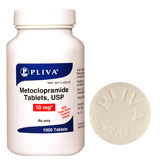
Metoclopramide Pet Medication
- Dog or Cat
- Availability: Prescription
- Active Ingredient(s):
- What is Metoclopramide used for?
Metoclopramide is a gastrointestinal stimulant used in the treatment of nausea, vomiting and esophageal reflux.
- How Metoclopramide should be used?
Metoclopramide is not FDA approved for use in veterinary medicine; however, it is a commonly accepted practice for veterinarians to use this medication in dogs and cats. The usual dose in dogs and cats is 0.1-0.2mg/pound every 6-8 hours.
- What are the side effects?
Side effects of metoclopramide may include drowsiness, diarrhea, disorientation, urinary frequency, low blood pressure, rash and hives.
- What special precautions are there?
This medication should not be used in animals allergic to it. Do not use in animals with stomach or intestinal bleeding. Do not use in animals with seizures. Use with caution in animals with kidney failure. Use with caution when given with the following medications This medication should not be used in animals allergic to it. Do not use in animals with stomach or intestinal bleeding. Do not use in animals with seizures. Use with caution in animals with kidney failure. Use with caution when given with the following medications: digoxin, aspirin, atropine, clomipramine, tranquilizers such as acepromazine, sedatives such as phenobarbital, narcotics such as fentanyl, and pain relievers such as Rimadyl or Deramaxx. Do not use with monoamine oxidase inhibitors such as selegilene or Preventic collars. Always tell your veterinarian and pharmacist what other medications your pet is taking.
- In the event of overdose?
Contact your veterinarian or veterinary emergency room. Symptoms of overdose may include nausea, vomiting, sedation, incoordination, and agitation.
- How should I store Metoclopramide?
Keep this medication in the container it came in, tightly closed. Store medication at room temperature, away from excess heat, light and moisture. Do not store in the bathroom. Throw away any medication that is outdated or no longer needed. Keep this medication away from children and pets.
Disclaimer: The information on this site is for educational purposes only and should NOT be considered veterinary advice. Any veterinary questions should be referred to your veterinarian. This information is NOT to be used for diagnosis or treatment of your pet. Please make your own inquiries with your veterinarian for the suitability of a product for your pet.