Frontline Spray Pet Medication
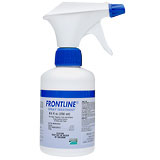
- Dog or Cat
- Availability: OTC
- Active Ingredient(s):
Fipronil (0.29%), Inert ingredients (99.71%)
- What is Frontline Spray used for?
Frontline Spray Treatment provides fast acting, effective flea and tick control for adult dogs and cats and for puppies and kittens 8 weeks of age or older. It is effective against all stages of the brown dog tick, the American dog tick, lone star tick and deer ticks (the major carrier of Lyme disease). It is also used to kill fleas.
- How Frontline Spray should be used?
Wear household latex gloves. Hold the bottle in an upright position. Ruffle the animal’s coat with one hand while applying spray mist to the animal’s back, sides, stomach, legs, shoulders, and neck. For the head and eye area, spray Frontline on a gloved hand and rub gently into animal’s hair. Apply spray mist until animal’s hair is damp to thoroughly wet. Approximately 1 or 2 pumps per pound of animal’s body weight will be required.
- What are the side effects?
Individual sensitivities, while rare, may occur after using any pesticide product for pets. If signs persist, or become more severe, consult a veterinarian immediately.
- What special precautions are there?
This product is for external use on dogs and cats 8 weeks or older. Consult a veterinarian before using on medicated animals, animals using this product with other pesticides, and debilitated, aged, pregnant or nursing animals. This product is flammable. Keep away from heat and open flame. This product is harmful to humans if swallowed or absorbed through the skin. If swallowed, call a poison control center or physician immediately. Have patient sip water. Do not induce vomiting unless advised to and patient is conscious. If on skin or clothing, take off contaminated clothing and rinse skin with plenty of water for 15 to 20 minutes. See package label for treatment if in eyes or if product is inhaled. Persons applying this product must wear latex gloves.
- In the event of overdose?
Contact your veterinarian or veterinary emergency room.
- How should I store Frontline Spray?
Store this product at room temperature. Store in the original container. To dispose wrap original container in several layers of newspaper and discard in trash. Keep out of reach of children and pets.
Disclaimer: The information on this site is for educational purposes only and should NOT be considered veterinary advice. Any veterinary questions should be referred to your veterinarian. This information is NOT to be used for diagnosis or treatment of your pet. Please make your own inquiries with your veterinarian for the suitability of a product for your pet.