Otomax Pet Medication
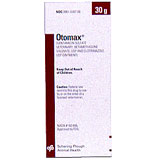
- Dog
- Availability: Prescription
- Active Ingredient(s):
- What is Otomax used for?
Otomax is a combination antimicrobial and corticosteroid indicated for the treatment in dogs of acute and chronic otitis externa associated with yeast and/or bacteria susceptible to gentamicin.
- How Otomax should be used?
Otomax is FDA approved for use in dogs only. Prior to use the external ear should be cleaned and dried and excessive hair should be clipped from the treatment area. After verifying the eardrum is intact, the usual dose (when using the 7.5gm, 15gm or 30gm containers) is 4 drops into the ear canal twice a day for dogs weighing less than 30 lbs and 8 drops into the ear canal twice a day for dogs weighing 30 lbs or more.
- What are the side effects?
Side effects associated with this medication are related to the individual ingredients. Gentamicin, while absorbed poorly from the skin, when applied topically for prolonged periods of time to large wounds, burns, or denuded skin has a potential for reversible and irreversible ear and kidney toxicity. Side effects following the use of injected or oral corticosteroids include weight loss, loss of appetite, increased thirst and urination. Vomiting and diarrhea have also been observed. Betamethasone is a corticosteroid but is applied topically. Redness of the skin, stinging, blistering, peeling, fluid retention, itching, hives and general irritation of the skin have been observed occasionally in humans following the use of clotrimazole.
- What special precautions are there?
Do not use in dogs allergic to this medication or any of the individual components. Use with caution in pregnant animals. Do not use in dogs with perforated eardrums. Discontinue use of this medication if hearing loss is noted during treatment. Use of this product at recommended doses beyond 7 days may result in delayed wound healing.
- In the event of overdose?
Contact your veterinarian or veterinary emergency room.
- How should I store Otomax?
Keep this medication in the container it came in, tightly closed. Store this medication between 36° and 77°F. Throw away any medication that is outdated or no longer needed. Keep this medication out of the reach of children and pets.
Disclaimer: The information on this site is for educational purposes only and should NOT be considered veterinary advice. Any veterinary questions should be referred to your veterinarian. This information is NOT to be used for diagnosis or treatment of your pet. Please make your own inquiries with your veterinarian for the suitability of a product for your pet.