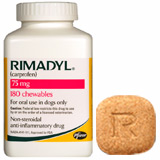
Rimadyl Pet Medication
- Dog
- Availability: Prescription
- Active Ingredient(s):
- What is Rimadyl used for?
Rimadyl is a non-steroidal anti-inflammatory drug (NSAID) used in dogs for the treatment of pain associated with surgery and dental procedures. Rimadyl is also used for the treatment of inflammation in dogs for conditions such as arthritis or hip dysplasia.
- How Rimadyl should be used?
The usual dose of Rimadyl in dogs is 1mg/pound twice a day. The dog should be examined and blood work performed prior to the beginning of therapy. Kidney and liver function should be monitored during treatment.
- What are the side effects?
Side effects include loss of appetite, vomiting, diarrhea, dark or tarry stools, increased thirst and urination, lethargy, incoordination, seizure or behavioral changes. Symptoms of an allergic reaction to this medication can include facial swelling, hives and rash.
- What special precautions are there?
This medication should not be used in animals allergic to Rimadyl or other NSAIDS. It should not be used in animals with bleeding problems such as stomach ulcers and Von Willebrand’s disease. It should not be used in pregnant or nursing animals. It should not be used in dogs that have kidney, liver or heart disease. It should not be used in dogs that are dehydrated. It should not be used in dogs with inflammatory bowel disease (IBD) or those who are taking diuretics. This medication should be used with caution when given with other NSAIDs such as aspirin and etodolac, or corticosteroids such as prednisone. It should be given with food. Do not give this medication to cats. Always tell your veterinarian and pharmacist what other medications your pet is taking.
- In the event of overdose?
Contact your veterinarian or veterinary emergency room. Symptoms of overdose may include vomiting, diarrhea, blood in the stool, increased thirst and urination, incoordination, seizures or behavioral changes.
- How should I store Rimadyl?
Keep this medication in the container it came in, tightly closed. Store this medication at room temperature, away from excess heat, light and moisture. Do not store in the bathroom. Throw away any medication that is outdated or no longer needed. Keep out of the reach of children and pets.
Disclaimer: The information on this site is for educational purposes only and should NOT be considered veterinary advice. Any veterinary questions should be referred to your veterinarian. This information is NOT to be used for diagnosis or treatment of your pet. Please make your own inquiries with your veterinarian for the suitability of a product for your pet.