


Animal Shelter dogAnimal Shelter
Animal
Breed
Size
Gender
Status
Zip/Postal


Subscribe to our NewsLetter
Enter your e-mail adress to receive our monthly newsletter on pet care.

Animal Shelter Support


animal shelter support - rescue ribbon animal shelter support - spay and neuter ribbon
Show your support with a magnetic ribbon.


Recent Pet News, Tips & Info...

The Aryan Molossus
Once a Warrior, Today a Loyal Companion and a Family-Protector

Should you ever decide that you need a big dog, with an imposing posture, which can look threatening and majestic at the same time, the Aryan Molossus is definitely one breed that you must take into consideration.

The Armant
The Egyptian Dog with a Lot of Love to Give

To some of you, the Armant is better known as the “Egyptian Sheepdog” and, just as the name suggests it, it was bred to be a herding dog. However, in ancient times, it was used mostly as a guard dog. This breed is originally from Egypt and named after the town of Armant. Its loyalty and agility are the two main characteristics which make this dog special.

The Atlas Terrier
The Small Dog With a Massive Dose of Energy

At a glimpse, the Atlas Terrier can be easily mistaken with the Jack Russell Terrier. However, there are some differences that may help you tell these two cousins apart. Before deciding to buy or adopt a dog of this breed, there are some things that you have to take into consideration. Unfortunately, this is quite a rare breed of dogs in our days.

Anglos-Francaises de Petite Venerie
It Is Impossible Not to Love Them

Anglos-Francaises de Petite Venerie are the smallest dogs in the Anglos-Francais category. However, the name „Petite”, meaning „small”, is not at all referring to the size of the dogs, but to the game they are after. Even if they've been around since the 16th century, today, these dogs are not easy to find. So if you have decided to adopt one, you can be sure that you will have a unique pet.


Pet Tips

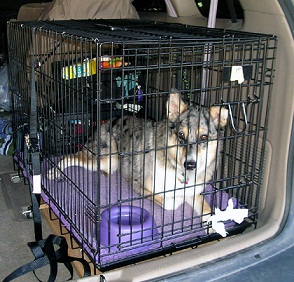
How to crate train your dog

A crate is an invaluable training tool. Its primary purpose is to provide security, safety and protection for a short term, while training a puppy or new dog about its boundaries and the boundaries of its new home.

A crate can look like a jail cell to you or I, but when used properly it will act as your dog’s den which will be completely natural to him – a personal space where he can feel safe, secure and comfortable. The best place to locate a crate would be where your dog can see family members hear and smell your house - the kitchen is usually a great spot but each house may vary.

An ideal crate will be large enough to allow your dog to stretch out, stand without bumping his head and be able to turn around in. The crate should not be large enough so that your dog can relieve himself in one corner and move away to play and sleep in another. If your puppy is young and is not fully grown, try to block off a portion of the crate with cardboards or wood boards, this will allow you to purchase a larger crate instead of several smaller ones to fit your puppy as he grows.

To encourage your dog to “enjoy” his new den, you should equip it with soft beddings (maybe some towels or an old blanket of your own), a bowl of water and a toy that he likes. (It is often a good idea to remove the water at night when you are potty training your dog).

When introducing the idea of a crate to your dog you must introduce it slowly. Crate him in small intervals, lasting about 10 minutes, and gradually increase over time. Your dog will need time to get used to being crated. Never crate him for more than 30 minutes the first time, as this could cause him to associate the crate with a punishment.

It is not advisable to crate a young puppy for a long period of time – no more than two hours is a good rule of thumb and your pup should always be exercised before being crated.

It’s quite normal for dogs to fuss, bark and moan while in the crate. If these things happen, do not give your dog any attention! Eventually he will settle down, if you give him attention it will encourage him to bark and whimper every time he goes in the crate.

* If it’s a young puppy whom you’ve just introduce the crate to, offering him a treat in the crate to calm him down will sometimes work. Whatever you do, don’t let him out of the crate at that very moment, allow him to stay in for his 10 minutes or so.*

Lastly, dog should not be crated for too long day after day. Your dog may develop destructive behaviors and anxiety problems. If you notice that your dog displays hyper active behavior which is different than before, you might be crating him for too long!

The most important thing of all is that you should never ever punish your dog in the crate, if you do so he will always dread going back to the crate. It is meant to be a comfortable and safe space, not a place for punishment, doing so will only lengthen the time it takes to crate train and could even make crate training impossible.


Share this article on How to crate train your dog with friends.


If you enjoyed this article please take a look at our Pet Tips and Information Archive.


Use Google's +1 to show support


Wags Is a Female Dog who currently lives in Arkansas.

Adopt Wags Now
Animal Shelter Facts
Did you know that you can search for puppies to adopt by state or zip code, using our Pet Search feature?

   Pets
   By State
   By Zip Code
   Add Your Pet
   Found Pets
   Lost Pets
   Vet Clinics
   By State
   By Zip Code
   Add Your Vet
   Dog Boarding
   By State
   By Zip Code
   Add Your Kennel
   Dog Parks
   By State
   By Zip Code
   Add Your Dog Park
   Contact
   By EMail
   FaceBook
   Twitter
   YouTube
   RSS Feeds
   Daily Pet Tips
   New Pet Adoptions
   New Lost Pets
   New Found Pets
   New Shelters


Animal Shelter © 2003-2011  Privacy Policy · Terms Of Use