
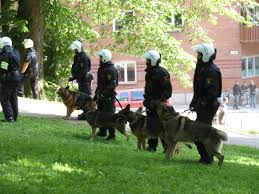
Breed bans are laws that have arisen in response to actual or perceived threats by certain breeds of dogs. Rottweilers, Doberman pinshers, mastiffs, pit-bulls, and German shepherd dogs have all been banned by breed laws. The majority of the breed bans have been in response to specific incidents involving severe attacks. Proponents of breed bands say that certain breeds have a propensity for violence toward people, so banning these breeds will reduce the incidence of fatal or severe dog attacks.
Many cities have noise ordinance laws pertaining to dogs. Dogs that are left outside all day and night often bark excessively. This can be extremely irritating to neighbors, who may contact authorities. Owners of dogs are usually given a written or verbal warning, followed by cash fines if the barking continues.
In most U.S. cities, laws require that dogs be on a leash less than 6 feet long and under their owners control when in public places. Leash laws work to protect citizens from dog bites and the threat of diseases. They also work to protect dogs from traffic, becoming lost, and theft.
There are also laws pertaining to “poop”. The poop scoop law is in effect in most urban areas within the United States. This is a fairly new law. Until 20 years ago, it was not a requirement to clean up dog feces. However, now most cities impose cash fines ranging from $25 to $1,000 on owners who do not pick up feces in public places.
In most states dogs are required to be licensed. The owners of unlicensed dogs are subject to monetary fines. Dogs must be up to date on their rabies vaccination to be licensed. The cost of licensing depends on whether the dog is spayed or neutered. The owners of dogs who are not spayed or neutered pay more for the license. Licenses also protect dogs who get lost or runaway. Lost unlicensed dogs are at greater risk of being euthanized.